

What if there were some simple ways to get your students thinking and working, rather than turning to AI to do those things for them? And what if these strategies were ones that don’t require a pricey program for detection or hours on a teacher’s part? While it’s unrealistic to think we can ever stop all students from using a crutch to do their work, I have 5 strategies to boost critical thinking & prevent AI use.
All you need is something pretty low-tech: paper. This post is not about in-class essays, however. You can read about those as a way to ensure students are doing their writing here. Today, I want to tell you about some strategies I use with my students, ones that get them actively learning and thinking critically.
I’ve written before about the school supplies that secondary teachers need to engage students – chart paper, post-it notes, masking tape, highlighters, markers or colored pencils. With these simple tools, you can set up so many activities that get your students thinking and learning, like the ones I share below.
Each of the following activities works well because it provides opportunities for students to be active rather than just sit passively and tune out. They are visual and tactile, two things that add to student learning. Also, each is an activity that builds not only important ELA skills but also student confidence.
And when students are confident in their ability to do tasks, they are less likely to turn to AI to do the work and thinking for them.
Color-coding to improve student writing
The first time I used this strategy was out of total frustration. I was so tired of students leaving required elements out of their assignments that I decided I’d give them a way to ensure that they didn’t.
On the day before the assignment was due, I told them to bring their draft. When they arrived in the classroom, each student got a handful of highlighters and crayons, and we got to work. I modelled how to highlight and underline the different components of the analytical paragraph they were working on. The topic and concluding sentences were in the same color, and once the students highlighted them, they had to ask themselves if they were connected. They underlined their quotation and highlighted their analysis of it in a different color. And so on.
And guess what? The quality of the assignments that were passed in skyrocketed. After that, highlighters and coloured pencils became ever-present tools in my classroom.
Why it works: This exercise gives students a visual snapshot of whether or not they have met the requirements of an assignment. If they are missing any, they know what they need to revise.
Show students how to write effective paragraphs

This next strategy was one that I used to help my students understand how to structure a paragraph. NOTE: It might seem like all we did in this class was paragraphs, but that is not the case. We did, however, do a lot of skill-building with paragraphs, as I believe that once students can write a solid paragraph, they can start putting them together.
This exercise is called build-a-paragraph, and it starts with the teacher writing a model paragraph in large font, copying it, and cutting up each sentence. You create a little bundle of sentences for each group; then, they need to put it all back together in the right order.
Why it works: First of all, the tactile nature of this (and the competition to be the first group to get it right) boosts engagement. But, more importantly, the activity leads to so many good discussions about the components of a well-written paragraph. You’ll smile as you walk by groups discussing whether a sentence sounds like an intro or conclusion and which statement is an analysis of which quote.
I encourage you to give this a try: Click here to read more and to get more detailed instructions for the process.
Hexagonal thinking boosts confidence and builds skills
This is an activity that takes some prep, but it is so worth it. And I never met a class that didn’t love it.
First, you need to brainstorm single words or short phrases that are elements of a text. Then you transfer these onto a series of hexagons, print them off, and cut them out. This takes time, but they can be reused, and I have some time-saving techniques in my post.
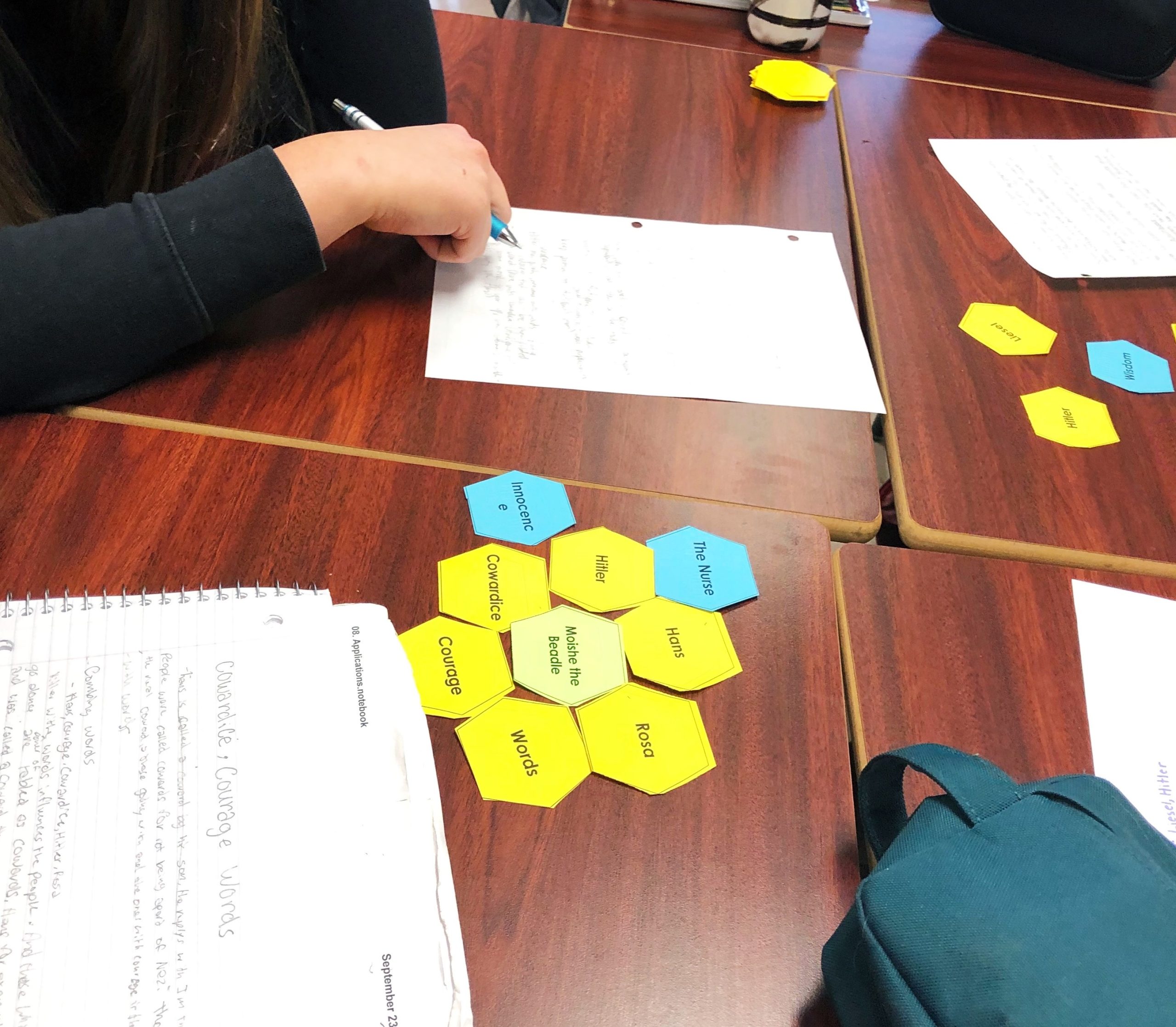
Next, group students, give each group a pile of hexagons, and have them put the pieces together. They need to find links between events, characters, and ideas in the text, and then develop some analytical statements about these links.
Once again, you’ll be smiling proudly as you circulate, listening to deep discussions about the text.
Why it works: This is another tactile, visual activity that allows students to see connections. They discuss many ideas from the text and start to build a lot of analytical muscle. More importantly, they start to believe that they can analyze a text on their own.
Get more details (and a template) here.
Mind maps and outlines boost critical thinking & prevent AI use
I went through a lot of chart paper with my classes. That’s because it provides the perfect canvas for collaborative critical thinking activities. We used it for writing, for close reading, and for analysis.
We did these activities a lot, not just because they were engaging, but because they reinforced focus, organization and idea development, three important elements of a well-written and thought-out paragraph. The students knew that their “topic sentence” went at the top, and then they filled the chart paper with their support. There were many variations on this activity, but each one took them through a thinking process and reinforced the skills they needed to build.
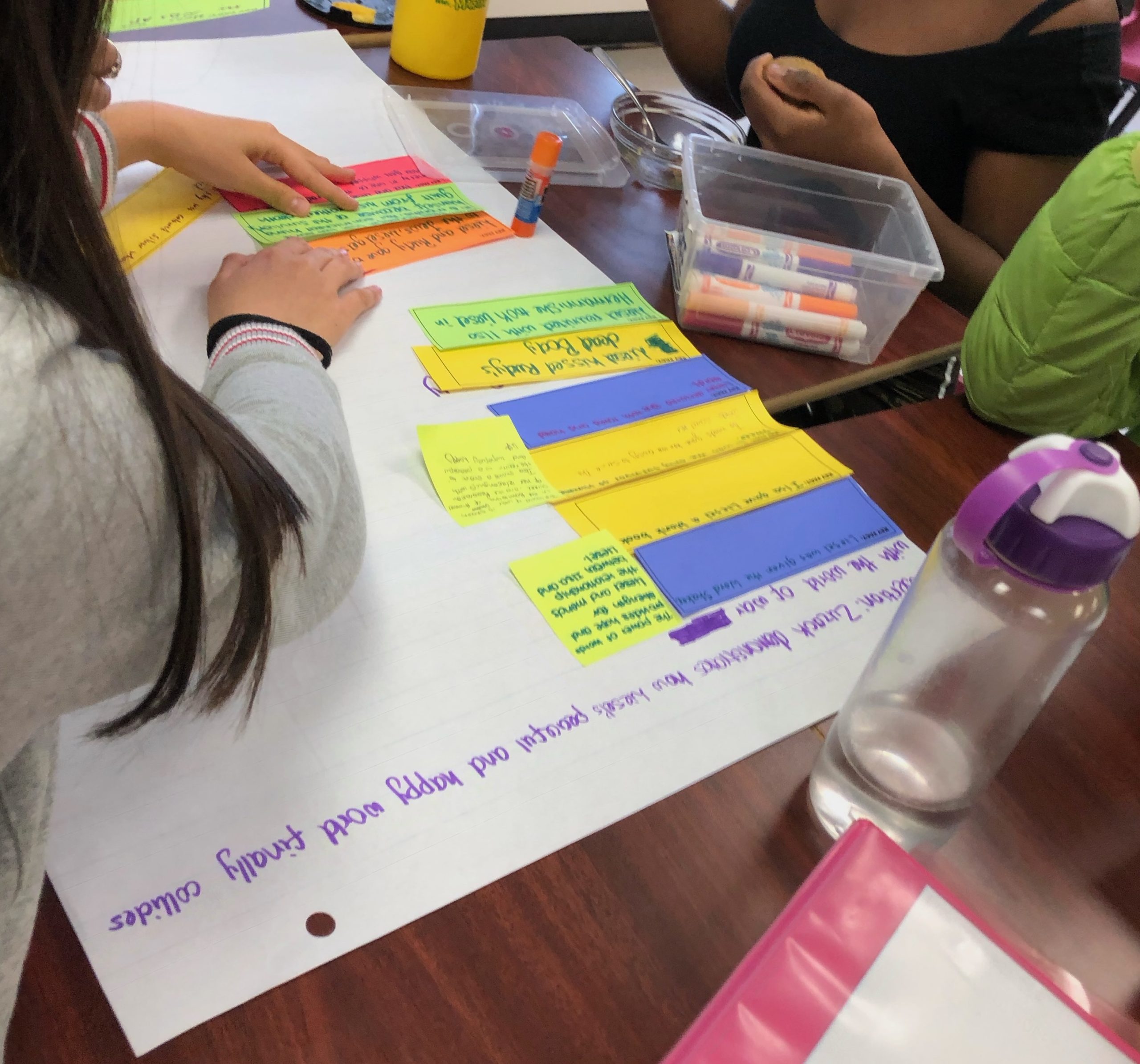
Why it works: You’ve guessed it: once again, this very tactile, visual activity helps students “see” the thinking process. It’s also another collaborative activity that keeps them engaged and learning.
I’ve written quite a number of posts about these activities, and here are some of my favorites:
How to write an outline activity
Mind maps for analyzing a text
Author purpose jigsaw activity
Gallery Walks – sharing and adding ideas
Gallery walks were another staple in my classroom. They gave students a chance to move as they observed others’ thinking processes and allowed them to practice the all-important skill of pushing ideas.
My gallery walks almost always came after a chart paper activity. Each group would adhere their posters to the wall, then rotate around to visit each one. Tasks would vary, but most often, they would be directed to build on their classmates’ ideas by adding another point or example on a Post-it note.
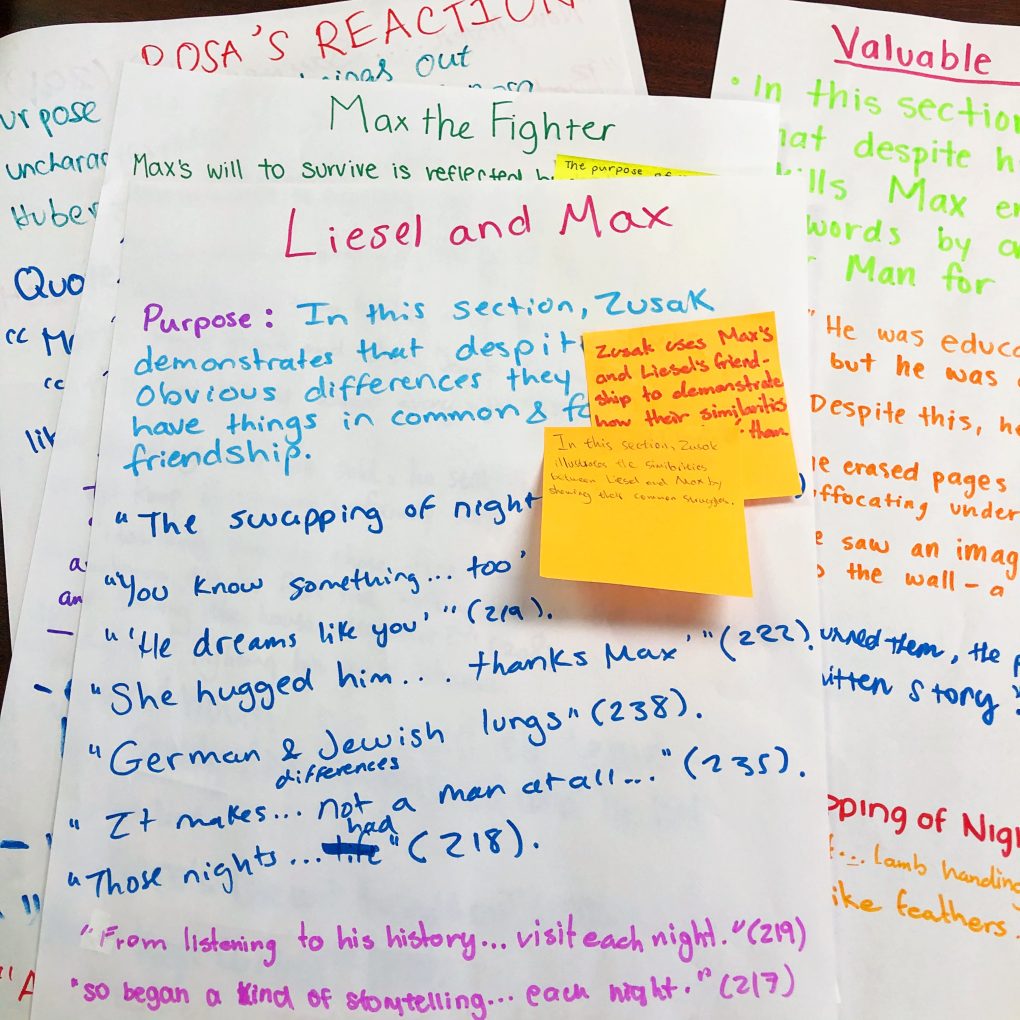
Read more about gallery walks here.
Why it works: Gallery walks offer a change of pace after an activity that requires students to work on a focused task. It’s a “break” from the action, but also one that requires them to reflect on what they have learned already. Then, they get the chance to push some ideas a little further.
Confidence in skills means less AI use
More engagement in class? Less apathy from students? Better quality assignments? Students who do their own thinking and writing? Regardless of your motivation for using any of the above activities, these 5 strategies to boost critical thinking & prevent AI use are worth trying.
That’s because in order to build skills, students need to feel they know how to be successful. And each of these activities will show them the processes they can follow to get there. When they feel confident, they will be far less likely to turn to other means to get their work done.
And, class will be a whole lot more fun!
You will find many of these activities all laid out and ready to go in this resource.
Please let me know if you have any questions!
You may also like:
Teach Essay Writing without Grading any Papers
Leave a Reply