
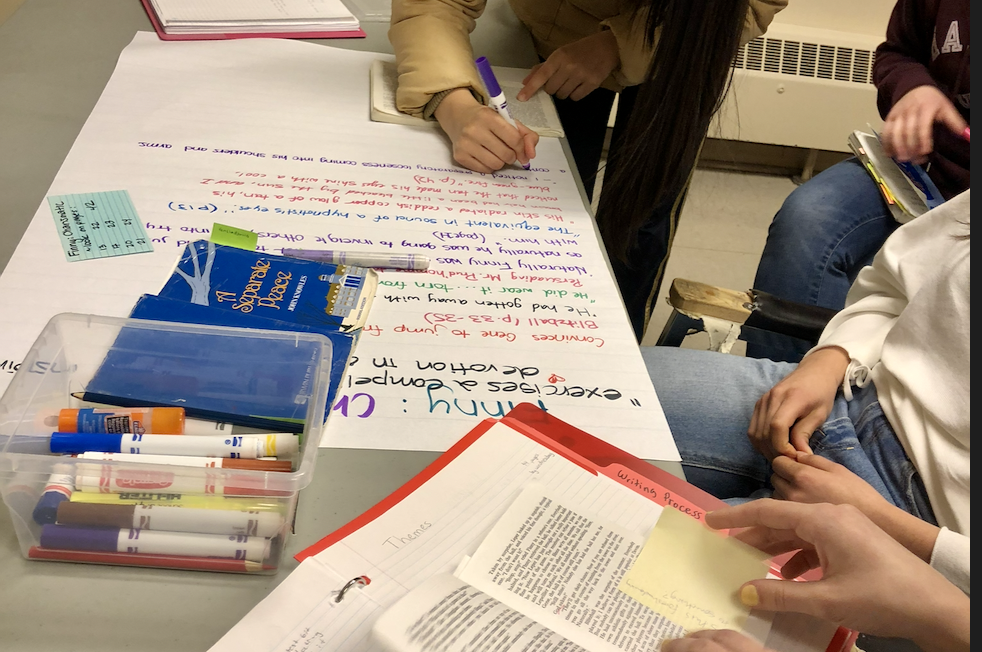
Have you ever read a student’s literary analysis and wondered what happened to all the things you taught them? I certainly have. Many times.
This was after I’d shown them how to make inferences that lead to a solid claim, choose solid textual evidence, structure an analysis, and support and develop their points. I modelled the process and gave them clear examples. But when I read their work, I was overwhelmed with plot summary, weak and underdeveloped explanations, and quotations that don’t really prove anything – if they were there at all.
Sound familiar?
I spent years trying to crack this nut, to figure out how to help my students get better at literary analysis. And while teaching them how to write analytical paragraphs was important, I came to realize that some students weren’t struggling with the writing as much as they were struggling with the critical thinking that needed to happen first.
The reality is that before students can write a strong literary analysis, they need to interpret what they’ve read, consider different possibilities, select strong evidence, and then explain how it supports their ideas. They need to do all this without just summarizing plot. That’s a lot of thinking, and if they haven’t had enough practice doing it, a paragraph “formula” isn’t going to solve the problem.
So, if your students struggle to move beyond surface-level literary analysis, I think it makes sense to spend more time on the thinking process before asking them to write. And I’m going to show you some ways to do that without adding another major assignment to your already busy schedule.
In this post, I share:
-
How to build critical thinking skills that strengthen literary analysis
-
Ways to help students question and refine their interpretations
-
Strategies for getting students to explain and support their ideas
-
How to use discussion to deepen literary analysis
-
A quick, ready-to-use critical thinking activity
-
Ways to help students organize their ideas before writing
1. Separate the thinking from the writing
When we ask students to write a literary analysis paragraph, we’re actually asking them to do several things at once. For students who struggle with any of those steps, the whole task can feel overwhelming. So, what if we took the writing out of the equation occasionally?
After reading a short story, a poem, or a chapter, give students a question that requires interpretation rather than recall. For example: Was the character’s decision an act of courage or selfishness?
Instead of asking them to write a paragraph, have them think independently for a minute, jot down their initial position, and then discuss it with a partner.
Here’s the important part: don’t let the discussion stop at sharing opinions. Ask students to explain what makes them think as they do. Encourage their partners to question their reasoning and offer alternative interpretations. For example, a student might begin by saying that the character was selfish. But after discussing the circumstances surrounding the decision, they might realize that fear or loyalty played a role, too.
Having these discussions in a low-stakes situation helps them build skills for analysis. And, when students have worked through an idea orally, they’re often in a better position to explain it in writing when the time comes.
2. Teach students that their first idea isn’t necessarily their best one
Students often approach literary analysis as though their job is to come up with an answer as quickly as possible. I’m not sure if this is what they think should happen, or that they just want to get the process over with. Regardless, jumping to a conclusion is an issue.
They decide that a character is brave or a story is about friendship, and they pick the first quote that they land on for support. Then their thinking stops. However, literary analysis requires more than that initial impression. Students need to learn how to question, test, and refine their interpretations. They also need to hunt for the best support.
One way to teach this is to give students a claim and ask them to find reasons it might not be entirely accurate. For example, you might write The main character is a good friend on your board or screen and ask students to look for evidence that supports this interpretation. Then challenge them to find something that complicates it. Let them work in partners so they can support each other in this task.
They may find that the character is loyal in one situation but abandons a friend in another. Maybe the character genuinely wants to help but, for a variety of reasons, makes decisions that hurt someone else. Exploring this can push the students to reconsider their original claim.
Instead of saying the character is simply a good friend, they might conclude that the character does value friendship but struggles to put someone else’s needs ahead of their own. Or they have conflicts that require them to make difficult choices. Or…many other reasons.
The trick is finding an example with some ambiguity or room for interpretation and pushing your students to examine it. When it’s not tied to a written assignment, it’s less overwhelming. And the more times you can practice this before writing, the better.
Try this: After students suggest an interpretation, ask them to finish the sentence, “However, someone could argue that…”
It’s a quick way to encourage them to look beyond their first idea, and it can lead to much richer discussions about the literature you are studying.
3. Make students explain the connection between evidence and ideas
One of the most common problems I see in literary analysis is that students assume that a quotation proves their point simply because they’ve included it. They’ve even embedded and cited it properly.
But, as we know, evidence doesn’t just jump off the page and speak for itself. Students need to first carefully select strong evidence and then explain what it reveals and why it matters. For example, a student might write:
The character is lonely because she eats lunch by herself every day.
That might be true, but eating alone doesn’t necessarily mean someone is lonely, does it? Maybe the character enjoys the quiet. Maybe she’s avoiding a difficult friendship. Or maybe she’s an introvert who just needs time to recharge.
The student analyzing this character needs to examine the context and explain why the evidence suggests loneliness. You can push them to do this with these questions:
What makes you say so?
So what? How does that prove your point?
I use these questions constantly in class because they require students to explain the reasoning behind their ideas. We establish this routine and, eventually, many know it’s coming and come prepared with the receipts.
So rather than waiting until students write a full paragraph or essay, you can give them quick, low-stakes opportunities to practise this skill. Give them a claim and a piece of evidence. Ask them to discuss whether the evidence actually supports the claim and explain why. You can even give them evidence that doesn’t quite fit. This forces them to evaluate the connection rather than simply write something that sounds analytical.
If you like this idea, I share a free Support It! activity in my post on teaching students to use textual evidence. It’s a simple way to help students move beyond unsupported statements and start explaining their thinking.
4. Give students lots of opportunities to disagree and defend their interpretations
One of the best ways to develop analytical thinking is to let students hear interpretations that differ from their own. When they discuss literature – or any idea – they can discover that someone else has noticed something they missed or interpreted an event differently. This is a valuable learning opportunity, especially when we want them to explain and defend their positions.
For example, after reading a story, give students two possible thematic statements:
Being loyal to others is always the right choice.
Loyalty can sometimes lead people to make harmful decisions.
Then, ask students which statement is better supported by the story. Have them choose a position, identify evidence that supports it, and explain their reasoning. Then invite students with different interpretations to challenge each other’s ideas.
The goal here isn’t necessarily to reach a consensus. It’s to help students recognize that interpretations need to be supported and that considering another perspective can strengthen their own thinking – even if they don’t change their original stance. Often, listening to another viewpoint and having to defend your own can help you strengthen your argument.
This works particularly well when you’re teaching theme, but you can use it with character motivation, conflict, symbolism, and author purpose, too. You can also use it when discussing ideas and real-life scenarios. You can show students that this is actually a very important life skill.
5. Practise the thinking skills before adding a difficult text
So far, I’ve focused on ways to develop students’ thinking while they’re working with literature. But I think there’s another important step we sometimes overlook: giving students opportunities to practise reasoning and argument without having to analyze a text at the same time.
Why?
Because when students analyze a text, they’re juggling several demanding skills at once. They have to understand what they’ve read, make inferences, develop an interpretation, find evidence, and explain their reasoning. They can get overwhelmed because they doubt their ability to keep all these balls in the air.
To help them trust their ability to do this, start with a topic students already know and care about. For example:
Should students be allowed to listen to music while they work?
Most students will have an opinion, and they won’t need to interpret a complicated text before they can participate. But don’t just ask them to vote on the matter. Instead, have them explain their positions, support their reasons, and respond to challenges from classmates.
For example, a student might say that music helps them concentrate. Someone else might point out that music can be distracting, especially when they’re trying to read or write. Now the first student has to think more carefully. Does music always help? Does the type of task matter? Would the answer be different for different students?
This process may lead them to amend their thinking and conclude that music is helpful in some situations but not others. It’s a process that builds the critical thinking skills we want students to use when they analyze literature. They’re learning to develop an idea, support it, question it, consider other perspectives, and refine their reasoning.
And because the topic is familiar, they can focus on those skills without the additional challenge – and worry – of interpreting a text. Of course, we still need to show students how to transfer that thinking to literature. But once they’re comfortable questioning and defending ideas, we have a foundation to build on.
I explore this approach in more detail in my post on building critical thinking skills in the age of AI, where I share ways to make thinking, questioning, and explaining regular classroom habits.
A 10-Minute Critical Thinking Activity for Literary Analysis
Here’s an activity you can use the next time students finish reading a short story or chapter. It takes about ten minutes, requires very little preparation, and gives students practice with the thinking process before they write.
The Claim–Challenge–Refine Activity
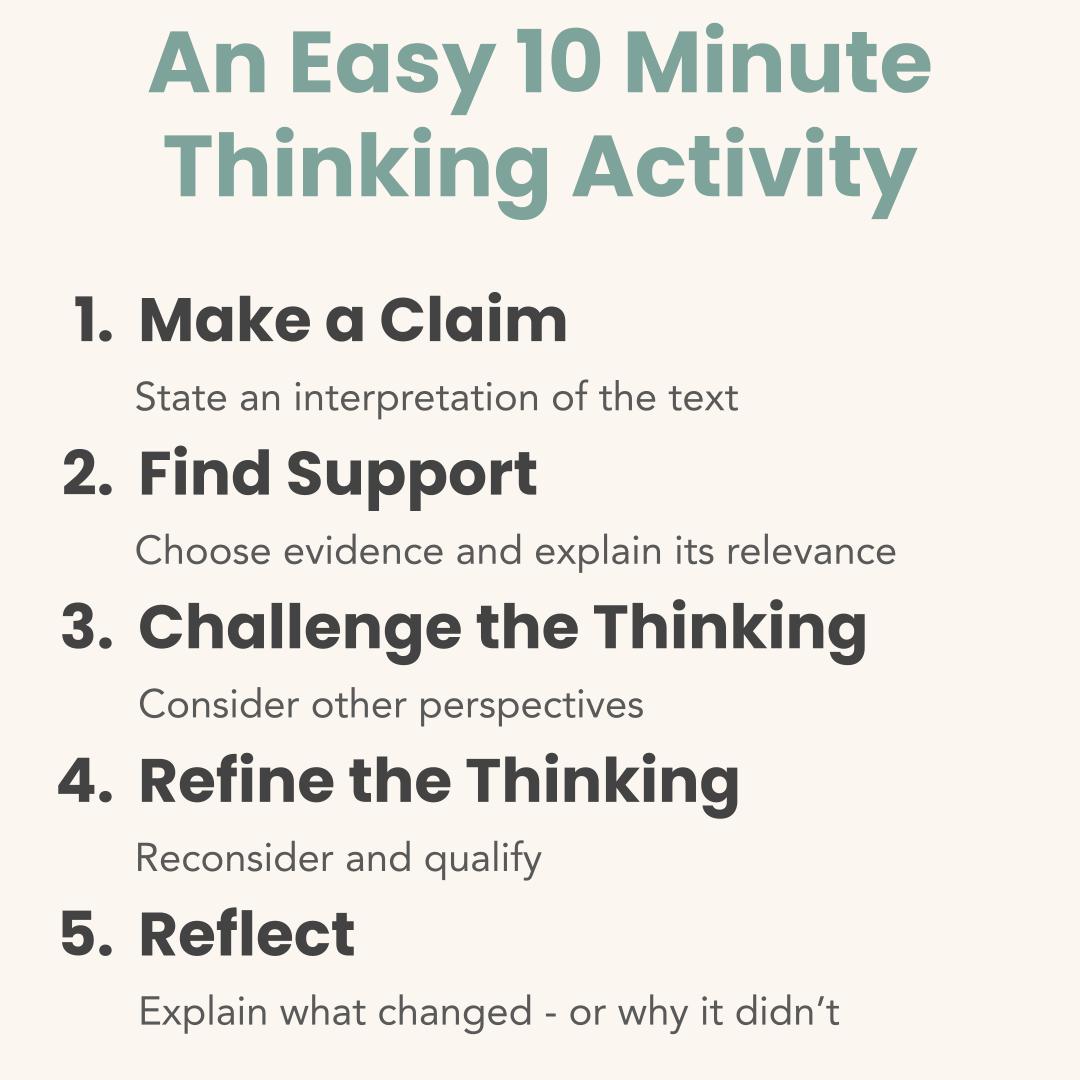
Step 1: Make a claim. Give students a statement about the text that could be interpreted in different ways. For example: The main character makes the right decision at the end of the story.
Step 2: Find support. Students work independently to identify one or two details that support or challenge the claim. Ask them to explain why those details matter.
Step 3: Challenge the thinking. In pairs, students share their positions. Each partner must ask a question that pushes the other’s reasoning further. They might ask, “What makes you say so?” or “Could there be another explanation?”
Step 4: Refine the claim. After the discussion, students revisit their original interpretation. Do they still agree with it? Do they need to qualify it or change it entirely?
Step 5: Reflect on your thinking. Students complete one sentence: “At first, I thought… but after considering… I now think…” OR explain why it did not change. “At first, I thought… and after considering… I still think…”
Notice what they haven’t done: write a full analytical paragraph. Instead, they’ve practised the reasoning that will eventually make those paragraphs stronger. They’ve also built some skills that will help them believe they can do it.
6. Make the thinking visible before students write
Sometimes students do have good ideas, but they often struggle to organize them into a coherent analysis. So activities that make the thinking process visible are really important.
When you want to do a literary analysis, instead of moving directly from reading to writing, ask students to sort, connect, or organize their ideas. For example, give groups several important details from a story and ask them to decide which ones support a particular interpretation. Then have them arrange the details in the order that makes the strongest argument.
The important part isn’t just the arrangement. It’s the conversation students have as they decide what belongs, what doesn’t, and why. You might hear students saying things like, “I don’t think this really proves our point,” or “This example should come first because it shows how the character begins to change.”
That’s exactly what we want to happen because students are making decisions about the strength and relevance of evidence before they start writing. They aren’t waiting for us – or AI – to tell them what to think.
I’ve shared a more detailed example of this approach in my post on using a visible thinking activity for analyzing text. And if you’re looking for more ways to scaffold the overall process, you can also read How to Teach the Process of Literary Analysis.
Better literary analysis begins before the paragraph
I don’t think there’s one strategy that will suddenly turn students into strong literary analysts. They still need explicit instruction, modelling, feedback, and lots and lots of practice. But I do think we can make a big difference by giving students more opportunities to develop their thinking before we ask them to demonstrate it in writing.
When students are used to questioning ideas, considering different perspectives, and explaining and supporting their reasoning, they’re better prepared to analyze a text.
The best part? We don’t need another big assignment to make that happen. You don’t have to spend hours and hours grading plot summaries to make it happen. Instead, short discussions, quick challenges, and low-stakes thinking activities can become part of our regular classroom routines. Then, when you do assign a paper, you will be much happier with the results.
Want to make critical thinking a regular part of your classroom?
I created my Critical Thinking Activities: Argument, Reasoning & Discussion in the Age of AI to help teachers give students more opportunities to practise the thinking skills we’ve been talking about.
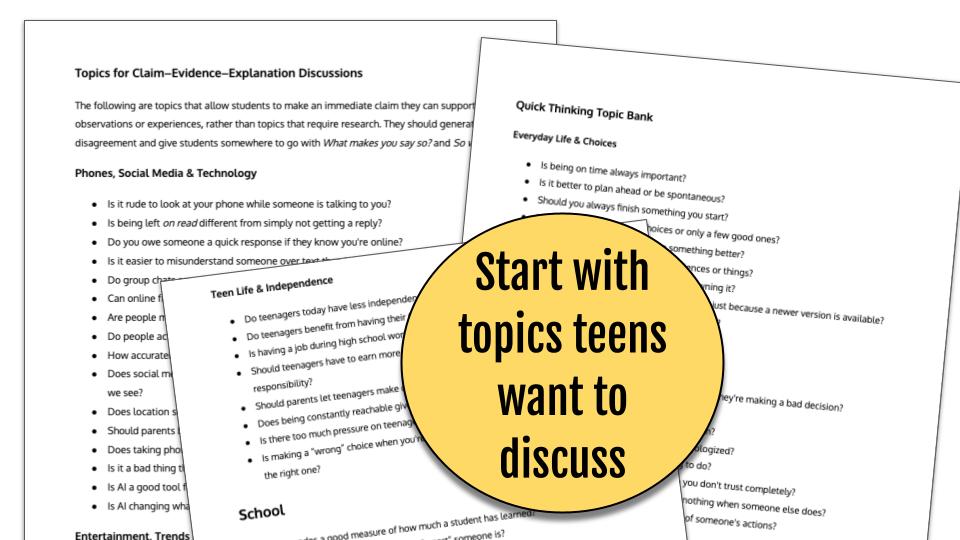
The activities use familiar topics that students can jump into without having to read or research first. Through structured discussions, challenges, and quick-thinking activities, they learn to develop ideas, explain their reasoning, question assumptions, and consider different perspectives.
And because the slides, prompts, and teacher guidance are ready to use, you can build these habits into your classroom routines without having to create everything yourself. Then, when students need to interpret a character, explore a theme, or support an analytical claim, they’ll have had practice with the thinking process that makes those tasks possible.
More help for literary analysis:
How to Teach the PROCESS of Literary Analysis
Teaching Students to Analyze Theme
Thanks for reading! Let me know if you have any questions.
Leave a Reply