
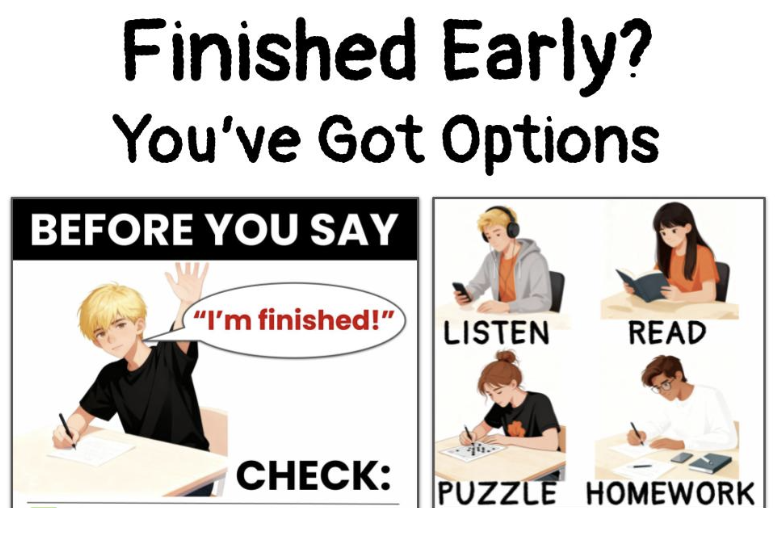
 What do I do now? You’ve probably heard this question from both your strongest students and those who rush to finish, and leaving it unanswered can lead to boredom or off-task behavior. However, the default solution, “extra worksheets” or busywork, can feel like a punishment for working efficiently. Early finishers don’t need more work; they need options, and this post offers meaningful early finisher activities for middle and high school ELA, ones that respect students’ time and support learning.
Teachers can give early finishers rich opportunities without piling on new assignments or additional assessments. With the right structures, students can revisit and refine earlier work, strengthen reading and writing skills, or reset their brains in quiet, productive ways that don’t disturb others. Choice-based, purpose-driven activities respect autonomy while fostering a classroom culture where curiosity and improvement feel rewarding—not like extra work.
In this post, you’ll find ideas to use tomorrow, options that allow students to:
- Learn the importance of reflection and revision
- Explore ideas they find interesting
- Enjoy reading for fun
- Rest and reset in a meaningful way

Why “More Work” Isn’t the Right Answer for Early Finishers
Imagine this: you have just finished all of your grading and are prepped for next week. Your principal finds out that your efficiency has left you with some free time and gives you more work to do. How are you going to feel?
But what if, instead, you used that time to listen to a podcast you have saved or to read something you haven’t had time to before? What if you actually settled in and read for fun?
Extra worksheets or “bonus” assignments might seem like a good idea from a teacher’s perspective because they keep students busy and extend their learning. However, this can unintentionally punish students who work efficiently. Just because a student can finish the required tasks quickly doesn’t mean they want to do more. Yes, some do, and you can provide those students with enrichment activities if they want them.
Another issue with the “bonus” assignments approach is that it can discourage struggling learners who feel they’ll never “catch up” to peers, or get to do the “fun” assignments that they are allowed to do.
So, what can a middle or high school English teacher do when students inevitably ask, “What do I do now?” (or are just distracting others) Let’s explore some meaningful early finisher activities for middle and high school ELA students that don’t “punish” students for good work.
First: Have They Finished Early or Rushed Through It?
This needs to be considered first. We often think of early finishers as the most capable students, the ones who are at the top of the class and may need a little extra challenge.
However, some rush through assignments because they see finishing quickly as the goal, not producing their best work. Giving these students structured opportunities to take a careful second look helps shift that mindset. When you teach them to pause, reread, and reflect – even for just two minutes – they begin to understand that quality matters more than speed.
In fact, asking all students who have finished a task – whether it was a rush job or not – teaches them the power of the revision process.
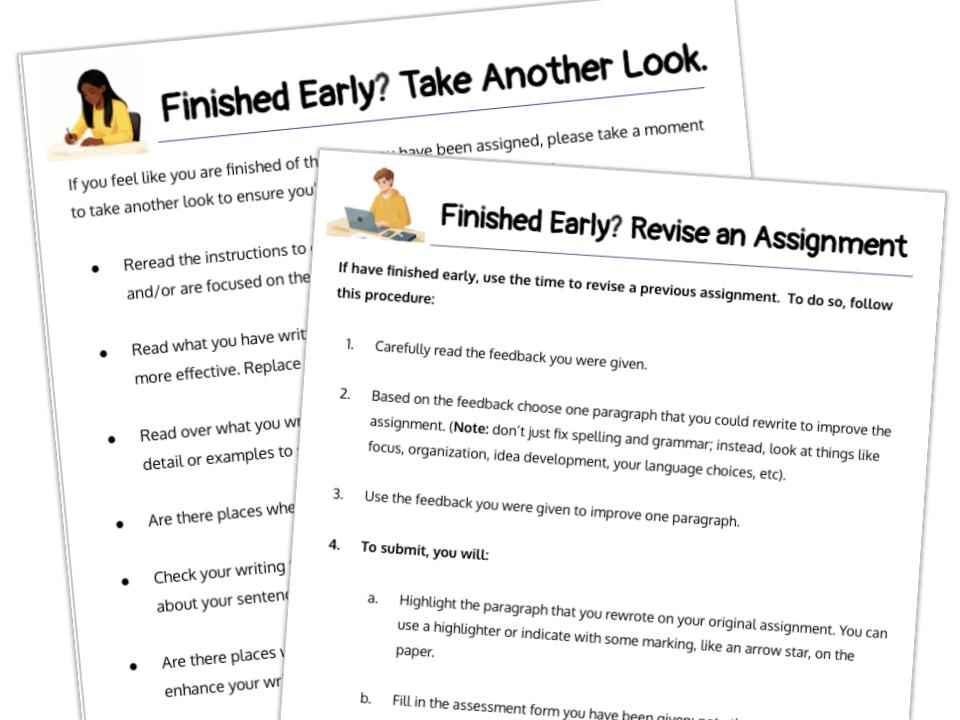
Encouraging a quick self-check for clarity, detail, organization, or errors turns revision into a natural part of the process rather than an extra task. Over time, students who used to race to the finish line learn to value the power of revisiting their work and taking more pride in what they produce.
For example, if you have given students a task where they have to write a response to something they have read or to complete a short writing assignment, you can ask them to find 2 – 3 words that could be stronger or a few places where they can add more detail. Or, you could encourage them to experiment with variety in sentence length or beginnings.
Give Early Finishers Skill-Building & Revision Options
Instead of sending early finishers off to do unrelated tasks, channel that extra time into meaningful skill-building. Revision-focused choices help students strengthen a previous piece of writing without feeling like they’re being punished with “more work” because they are improving something they have already done.
When students revisit their drafts with a specific purpose, like adding detail, sharpening word choice, or improving clarity, they learn that writing is a craft, a process, not a one-and-done event. These low-pressure, choice-based options allow students to grow at their own pace, build confidence in their abilities, and develop habits that improve their writing long-term.
Does this mean you will be re-grading and making that pile on your desk even higher? It doesn’t have to. Some early finishers will be motivated by the idea that revising their work will lead to better results for future assignments. Or, if they need a little added incentive, I have a procedure you can follow that doesn’t take a great deal of time. You can grab it in this handout.
 Allow Early Finishers to Read for Enjoyment
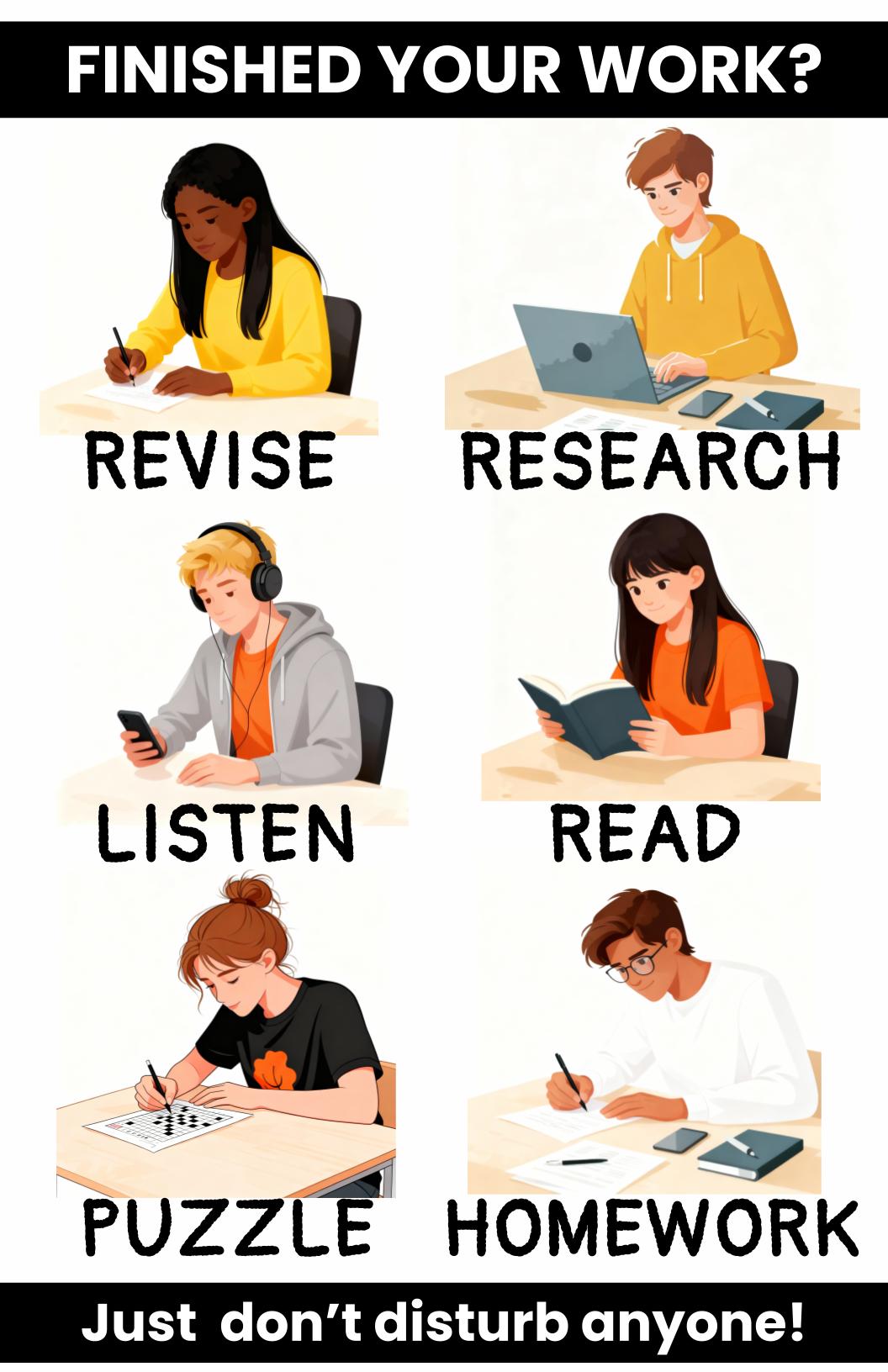
One of the beauties of being an English teacher is that we can always fill in time with a very meaningful option: reading. Students who have finished a task can read a novel for pleasure, without any extra work attached to it. They don’t have to answer questions, write a response, or complete a creative option to get great benefit from just settling in with a good book.
You could also allow them to surf the net, looking for articles to read about topics that interest them. They can be apply their research skills in an authentic manner, finding information about topics they are curious about.
You could even turn this into a bit of a challenge, where they find something interesting you could use with the whole class.
If reading isn’t something they gravitate toward, give them to ok to listen to something, to do a puzzle, or to finish work for another class. As long as they aren’t disrupting others, what’s the harm?
Offer breaks to reset the brain
Not every early finisher needs more thinking or more work. Sometimes they need a moment to breathe. Offering quiet, restorative options helps students recharge and honors the fact that learning can be mentally taxing. I fear that many students today don’t know how to be alone with their thoughts. Simple choices like daydreaming and relaxing allow students to reset without disturbing peers.
These brief brain breaks can improve overall stamina and help students return to learning feeling refreshed and ready. So the next time someone asks, “What do I do now?” you can have an answer that doesn’t create more work for them – or yourself.
I hope you found some early finisher activities for middle and high school ELA that you can use right away!
You might also like:
Getting students to do work that isn’t graded
Quick Energizers for Engaging Students
Leave a Reply