
If your students struggle to use support in their answers, you’re not alone. Teaching students to use textual evidence can be frustrating when their answers are vague, unsupported, and go nowhere. You ask for analysis, and they give you generalizations. You push for more… and you get crickets. When this happens, you need a quick way to get your students to dig a little deeper and provide textual evidence. And I have just the solution for this: an activity that pushes students to find evidence to support their answers.
One of the easiest ways to teach students to use textual evidence is to give them a claim and challenge them to find one piece of evidence that supports or refutes it. I call this the Support It! Challenge, and it works as a quick textual evidence activity with almost any text.
Why Students Struggle With Textual Evidence
Students often understand more than their responses show. The problem is that they haven’t developed the habit of going back to the text, locating the best evidence, and connecting that evidence to an idea. A quick Support It! Challenge isolates that skill before students have to use it in a longer written response.
How to Teach Students to Find Textual Evidence
Imagine the following scenario:
You ask a student a question about a text you are reading together, and he just shrugs. Or you do get an answer, and when you ask, “Why?” you hear “Because… I don’t know. It just does.”
A few students nod. Several look down. One flips a page like the answer might magically appear. Some have a vague idea, but they don’t know how to support it. And there you are at the front of the class, arms folded, hoping for some engagement, something to show they’ve understood the text.
Instead, the next time you get those shrugs, “dunnos,” and vague answers, push the pause button and pivot to a Support It! Challenge, so you can support your students as they learn to use evidence for analysis.
A Simple Textual Evidence Activity You Can Use Anytime
Support It! is a quick activity that helps students focus on finding evidence to support claims about a text. This routine gives them a clear structure for turning a weak idea into a strong, supported one. You can use it to improve your students’ critical thinking, literary analysis or as a discussion strategy.
Use the Support It! strategy any time:
- Students are giving vague, surface-level answers or saying “I don’t know.”
- They have ideas, but don’t know how to support them with text evidence
- You want to deepen the discussion quickly
Grab the free Support It! textual evidence activity here.
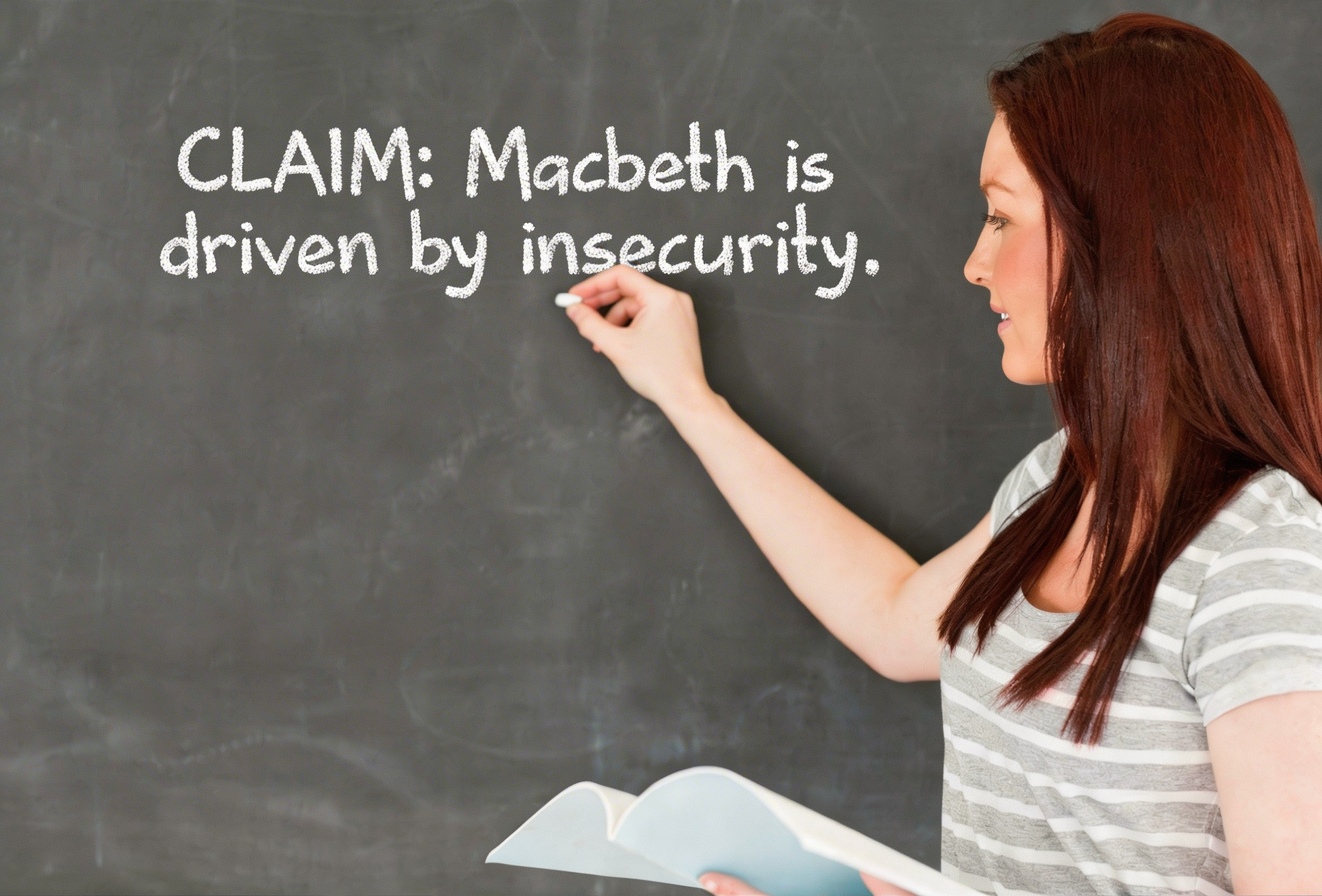
Step 1: Write a statement that needs textual evidence on the board or screen
You can use a student response OR one that you provide.
For example:
“The character (insert their name) is selfish.”
“This chapter has an eerie atmosphere.”
“The narrator is not reliable.”
Step 2: Challenge Them to Support It
Tell your students to quickly:
- Decide if they agree or disagree
- Find just ONE piece of textual evidence that supports their choice
You want them to move fast and not spend fifteen minutes looking for a piece of evidence or a quote, so circulate as they do this, prodding where necessary. You could even try putting a countdown clock on your screen to motivate them. The first time you do this process may take a little longer, but aim to speed it up each time you do it
Step 3: Present the Text Evidence
Next, it’s time to see what your students came up with. State the claim again, and ask them to provide evidence. Ask them to use a sentence frame like the one below when they answer. This gets them in the habit of using the language of analysis.
- The character is (or is not) selfish.
- For example, (include the quotation or paraphrase from the text)
NOTE: You could require each student to write down their evidence before the class discussion and turn it in as an exit ticket later. This will make them more accountable and lets you know who’s “getting it.”
A Textual Evidence Activity in Action:
Imagine you’ve asked a student, Callie, to state a trait of a character in a text, and she responds with: “He’s kind.”
“That’s a start, Callie…but how do you know this?”
Callie says, “I don’t know, he’s nice to people?”
You look around the class, and no one makes eye contact. You know what that means – It’s time to pivot and get everyone thinking..
“OK, I want everyone to find one moment in the text that supports Callie’s statement that ‘He’s kind.’”
Keep it focused – you are giving your students one idea and asking for one piece of evidence only.
While your students are searching for evidence, write the following on the board:
He is kind.
For example _________
You take a quick look around the classroom and it seems like most are done. You say: “Okay, he’s kind. For example…” and you point to Jesse because you know he’ll have an answer and be ok with sharing.
Jesse: “He’s kind because he helps the old man, even when no one is watching. This shows that he is caring because he’s doing it to be kind, not for recognition.”
You smile, nod, and point to Kendi.
Kendi: “He shows that he’s kind because he tells his friend to stop giving the supply teacher a hard time.”
Pete puts up his hand and adds, “Back to when he helps the old man… he doesn’t tell anyone about it, and this is kinda contrasted with his group of friends who are just doing things to put in their college applications, which they talk about all the time. But he just helps others because he feels it’s the right thing to do.”
“That’s an interesting point, Pete. Anyone add to that – or disagree that he doesn’t need recognition?”
And hopefully, it continues.
You can use this strategy quickly, in a moment when your students are not engaging with a discussion about a text. When you do so, you aren’t “letting them away” with vague answers; instead, you are pushing them to do the task you’re asking them to do by pausing and not moving on until you get the evidence.
The hope is that they soon learn their teacher is going to push them, so they might as well do it from the start
Turn It Into a Collaborative Text Evidence Activity
You can also use this strategy more intentionally when you want to spend more time building the skill of finding good text evidence for support.
- Write a claim on the board that you know has multiple reasons to support it
- Give students time to brainstorm reasons – alone first, then with a partner or group
- Ask them to share their best reasons
- Discuss as a class, and narrow down the top ones
- Assign each group a reason and have them find multiple pieces of textual evidence for support.
- Share these as well.
Grab the free Support It! textual evidence activity here.
So there you go: a simple activity to teach students to use textual evidence, one that will banish the crickets and “dunnos” from your classroom. When you pause and demand evidence, your students will learn quickly that vague answers won’t work anymore. And the more often students practise this simple routine, the more natural it becomes for them to find and use textual evidence on their own.
I hope you find this works for you!
Want More Quick Fixes Like This?
Teach Critical Thinking in the Age of AI
Check out how I use a strategy called Quotable Quickies to teach students to use evidence in their writing.
Read how I use sentence stems and classroom posters to strengthen analysis skills.
If you like having simple, ready-to-use strategies for those moments when a lesson starts slipping, you might want to check out my ELA Energizers & Brain Breaks.
They’re built for:
- Quick resets
- Clear structures
- Little to no prep
Want your students to include more detail in their paragraphs? You can teach them to support their ideas with these Supporting Ideas Stations. Students don’t always provide enough supporting detail to fully develop an idea. This activity will take them through a process they can follow and give them practice in the skill of supporting a single point
I am really excited to try some of your ideas for my high school Resource ELA class. My classes are much smaller than I would like making group work, discussion, and brainstorming (exasperating for me) pointless for students who haven’t been taught to think past “idk”. Now, with AI, it is even worse. At least, we are not dealing with cell phones this year so students are actually talking to each other and to me more which gives me hope. My students are usually highly intelligent but don’t always prove it in visible ways so thank you for these resources 😊
I hope it helps!